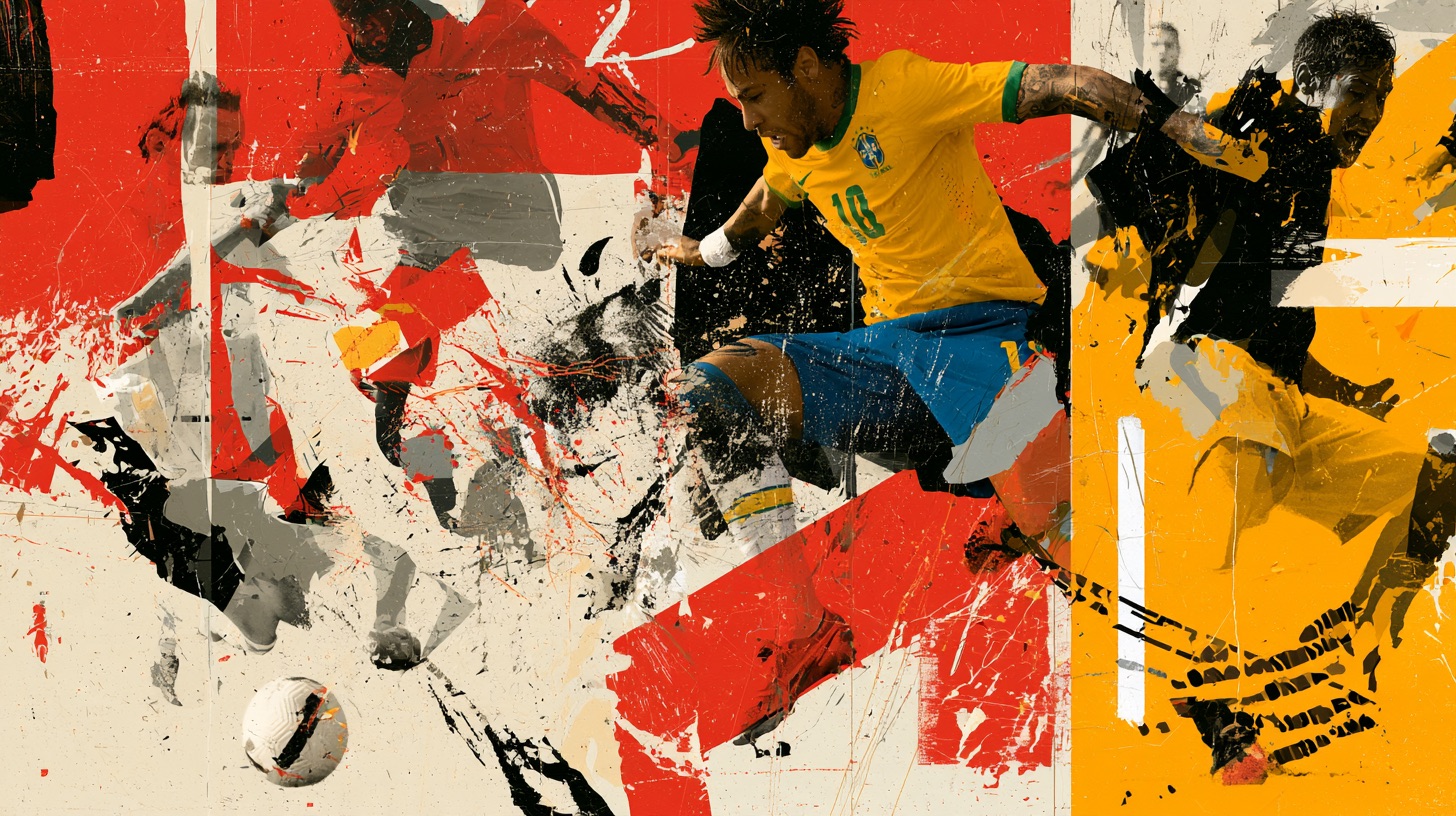
The World Cup ended on 19 July. Sixty-four days later the national teams came back, and the squads they came back with are not the squads that played it. FIFA has merged what used to be two separate breaks into a single sixteen-day block from 21 September to 6 October, four matches deep — the longest continuous run of international football outside a tournament. Coaches have been handed a month's worth of minutes with nothing at stake, and almost all of them have done the same thing with it.
What Four Coaches Did With It
4.4
Years
How much younger Brazil's squad got, from an average of 28.6 to 24.2
8
Teenagers
In the United States squad, alongside thirteen uncapped players
16
Years Old
Cavan Sullivan, called up by the USA; he turns seventeen mid-window
Brazil — The Cleanest Break
Carlo Ancelotti kept nine.
Brazil's first squad after the World Cup contains nine players who were at it, eight who have never been capped, and exactly two players over the age of thirty. The average age fell from 28.6 to 24.2 — a drop of nearly four and a half years in a single selection.
Ancelotti has been explicit that this is the point: three friendlies, against Australia twice and India once, chosen to look at young players rather than to win anything. Estêvão, who missed the tournament injured, is in. So is Endrick. So is Rayan of Bournemouth. Neymar is not.
A national team cannot normally do this. It can do it in the ten weeks after a World Cup, when nothing is being qualified for and nobody is counting.
The United States — A Sixteen-Year-Old
Mauricio Pochettino called thirteen uncapped players into a twenty-eight-man roster.
Cavan Sullivan is sixteen years old and turns seventeen on 28 September, two days after the United States play Peru. If he appears in any of the four matches he becomes the second-youngest player ever to represent his country, behind Freddy Adu, who came on against Canada at sixteen years and 243 days in January 2006. Sullivan signed a professional contract with Philadelphia Union at fourteen, and that contract contains a clause transferring him to Manchester City when he turns eighteen.
He has earned it in the most straightforward way available: six goals and eight assists since MLS resumed after the World Cup, including five goals in five consecutive matches. Alongside him Pochettino has called an eighteen-year-old centre-back, Neil Pierre, and a twenty-year-old full-back, Frankie Westfield — all three from the same club.
Eight teenagers in one senior squad is not a youth policy. It is a coach using the only window in a four-year cycle where losing a friendly costs nothing.
England — One Name
Thomas Tuchel named twenty-seven for four matches, and the argument is about one of them.
Rio Ngumoha is eighteen and had played one hundred minutes of league football this season when the squad was announced. England face Spain at Wembley, Czechia in Prague, Croatia in Rijeka and Czechia again at Wembley — a Nations League campaign, not a set of friendlies, which makes the selection a heavier bet than Brazil's or America's.
We wrote about the gap between what Ngumoha has done and what the data has recorded in our scouting report on him. A senior call-up three weeks after his eighteenth birthday is the part no database predicted.
Spain — The Exception That Explains the Rule
Luis de la Fuente changed almost nothing.
Spain won the World Cup in July. Their squad for this window retains the core that did it: Lamine Yamal, Rodri, Pedri, with Pau Cubarsí and Dean Huijsen in defence. Twenty-six players, and the notable selection news was a return rather than a debut.
This is the control group. Brazil, the United States and England are all rebuilding because the tournament told them to. Spain is not rebuilding because the tournament told them not to. The first window after a World Cup is not a youth movement — it is a verdict being acted on, and the only squad that did not change is the one that won.
World champions, 26 players
- Approach: retain the winning core
- Average age: broadly unchanged
- Fixtures: Nations League, competitive
- Message: this worked
Quarter-final exit, squad rebuilt
- Approach: nine survivors, eight uncapped
- Average age: down from 28.6 to 24.2
- Fixtures: friendlies in Australia and India
- Message: this did not
| Nation | Coach | The signal |
|---|---|---|
| Brazil | Carlo Ancelotti | Average age down 4.4 years; two players over thirty |
| United States | Mauricio Pochettino | Thirteen uncapped, eight teenagers, one sixteen-year-old |
| England | Thomas Tuchel | An eighteen-year-old with 100 league minutes, in a competitive campaign |
| Spain | Luis de la Fuente | The World Cup core, retained |
Quick Reference
When is this international window?
21 September to 6 October 2026 — sixteen days, up to four matches per nation. FIFA merged the old September and October breaks into one block from 2026.
Why are so many young players involved?
It is the first window after a World Cup. Nothing is being qualified for, so a friendly costs a coach nothing but tells him a great deal.
Who is the youngest player called up?
Cavan Sullivan of Philadelphia Union, sixteen, by the United States.
Did any major nation keep its squad?
Spain. They won the World Cup in July and retained the core that did it.
“A World Cup does not end when the final whistle goes. It ends nine weeks later, when four coaches name the squads that tell you what they actually thought of it.”
Loading…