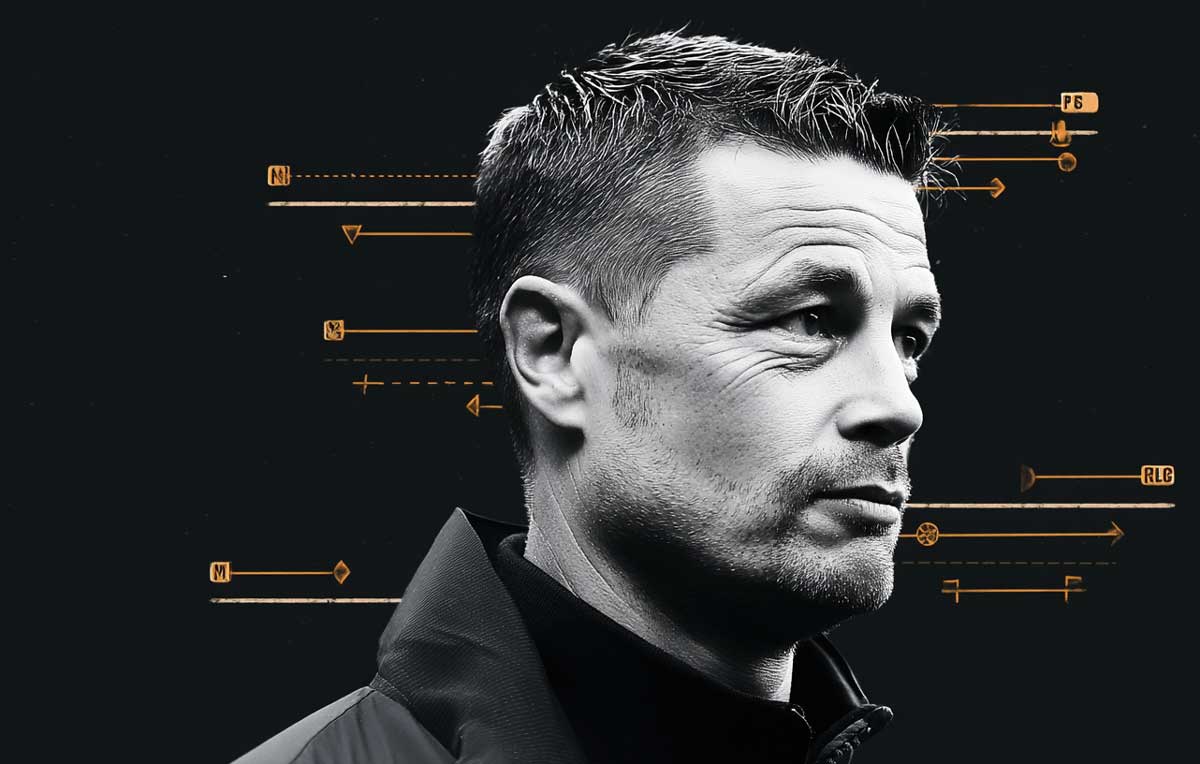
Pierre Sage arrives at Crystal Palace as Ligue 1 Manager of the Year, carrying the weight of Lens' historic Coupe de France triumph and a stunning second-place finish that challenged PSG's dominance. But can his pressing-heavy, transition-focused system translate from the structured environment of French football to the Premier League's relentless pace?
The Tactical Blueprint That Conquered France
Sage has blended his tactics from Lyon with Lens' base 3-4-3 structure, emphasising transitions and set pieces with a squad near the bottom of the Ligue 1 table in terms of talent, yet Lens are deserving of being at the top of the table. His approach represents a masterclass in tactical pragmatism — taking what worked at his previous club and adapting it to Lens' existing framework rather than imposing a completely foreign system.
The 47-year-old's methodology centres on high-intensity pressing triggers that force turnovers in dangerous areas. Sage has typically favoured a 3-4-3 system this season, which allows Lens to utilise a very high, intense press, with instructions for midfield runners to offer rapid vertical support so they can exploit the brief window before the opposition can return to their defensive shape.
Lens scored 36% of their goals from set pieces under Sage — the highest conversion rate in Ligue 1, demonstrating his tactical attention to detail in dead-ball situations.
This isn't just about running harder than the opposition. Lens scored eight of their 22 goals from set plays, especially from attacking corners, with Lens better in xG from set pieces (4.12) compared to PSG (2.36). Sage has turned corners and free-kicks into a weapon of precision, using innovative short-corner variations and far-post runs that exploit zonal marking weaknesses.
The Premier League Reality Check
“Sage's dream has always been the Premier League, but the tactical demands of English football will test every principle he's refined in France.”
The question Palace fans are debating isn't whether Sage can coach — his second-place finish was the club's best since 1998, and he recorded a piece of history by delivering the club their first ever Coupe de France title, enough to see him deservedly named Ligue 1 Coach of the Year ahead of Luis Enrique. The concern is adaptation speed.
From a Crystal Palace supporter's perspective, this feels exciting, but also slightly unnerving. Pierre Sage is not the safe, obvious Premier League appointment. Unlike Ligue 1, where teams often sit deep and allow tactical preparation time, the Premier League's pace could expose the gaps in Sage's system before he can implement the pressing triggers that made Lens so effective.
The Glasner Legacy and Tactical Continuity
Sage inherits more than just a squad — he inherits expectations shaped by Oliver Glasner's success. Winning the Conference League not only added a second major honor to the club's trophy cabinet but secured Palace's place in the Europa League next season, with Glasner's men living up to their billing as Conference League favourites.
The Austrian established a 3-4-2-1 formation that maximised wide overloads and created space for attacking midfielders to drift between lines. Sage's 3-4-3 shares structural similarities, but the execution differs fundamentally. Where Glasner emphasised possession retention and patient build-up, Sage prioritises quick transitions and vertical passes.
Tactical Philosophy
- High-intensity pressing
- Quick vertical transitions
- Set-piece specialist
- 67.5% win rate at Lens
Tactical Philosophy
- Patient possession build-up
- Structured wide overloads
- Positional rotation focus
- Conference League winner at Palace
The Development Question
Perhaps most crucially for Palace's long-term vision, fans have watched young players flourish in recent years and Sage appears well suited to continuing that philosophy, with this appointment suggesting ambition. His background as a technical director and youth coach suggests he understands player development beyond just first-team tactics.
Sage has focused on integrating young talents into the squad, such as the 19-year-old Thai-French prospect Erawan Garnier, who joined from Lyon and has featured in reserve and senior matches, aiding the team's depth and long-term development. This approach aligns with Palace's model of buying young, developing systematically, and selling strategically.
The Verdict: Calculated Risk or Masterstroke?
His tactical approach, player-development credentials and ability to build competitive teams on a sustainable model all aligned with what Palace were seeking, with Palace's decision-makers believing the 47-year-old is ideally suited to build upon the progress made and help establish the club as a consistent force in the top half of the Premier League.
The Premier League will test Sage's adaptability more than his tactical knowledge. They conceded only 34 goals in Ligue 1 last season, the second lowest in the division, while scoring 66, only eight less than the attacking riches of PSG. But defensive solidity in France doesn't guarantee Premier League success — just ask the managers who've discovered that English football's pace leaves little room for tactical adjustments mid-game.
Sage seems like a natural tactical fit for the role and has done enough at Lens to suggest that he could succeed in the Premier League too. The structure is there. The philosophy is proven. The challenge now is whether his pressing system can handle the Premier League's relentless intensity without leaving Palace exposed in transition.
Key Stats
What was Sage's win percentage at Lens?
67.5% across all competitions in his debut season
How many trophies did he win in France?
Two — Coupe de France with Lens, plus Ligue 1 Manager of the Year award
What formation does he prefer?
3-4-3 with high pressing and rapid vertical transitions
Loading…