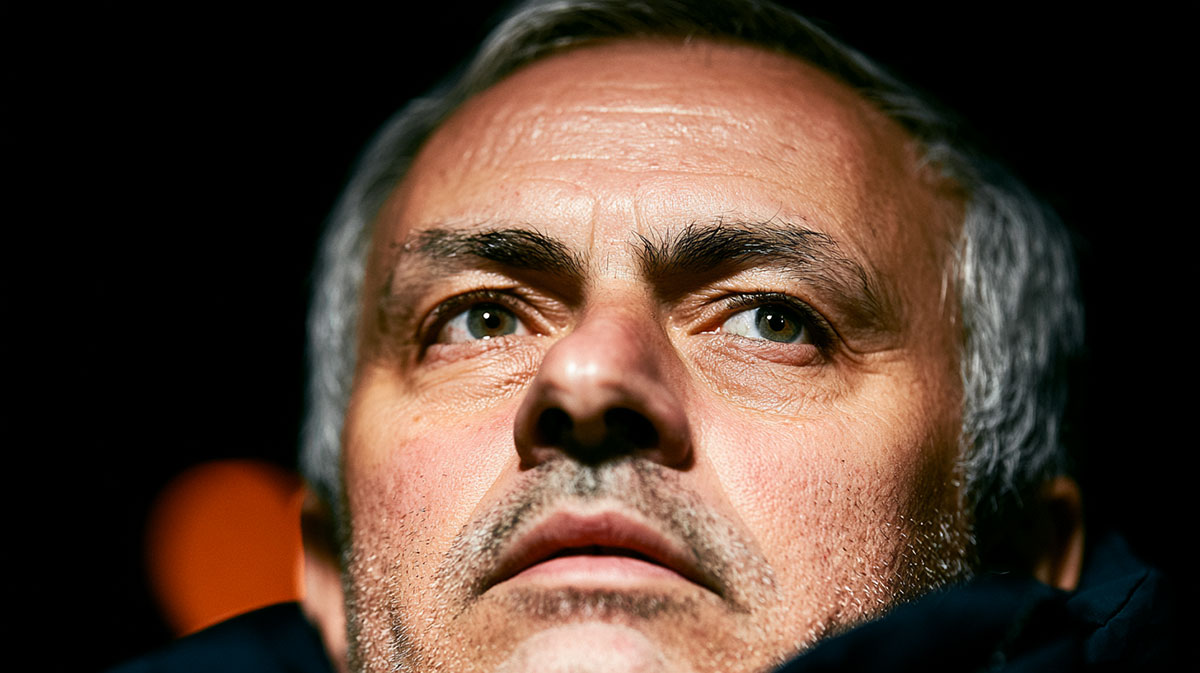
The Bernabéu corridors have seen many returns, but none quite like this. José Mourinho's potential second coming to Real Madrid represents more than mere nostalgia—it's a tactical evolutionary loop that could redefine both manager and club. Where once stood a defensive pragmatist armed with counter-attacking fury, now emerges a more nuanced architect, shaped by Serie A's patient brutality and Premier League's relentless intensity. The question isn't whether Mourinho has changed, but whether Real Madrid is ready for the version of him that has.
The Evolution of the Special One
Mourinho's first Madrid tenure (2010-2013) was defined by rebellion against Barcelona's tiki-taka hegemony. His 4-2-3-1 was a weapon of mass disruption—compact defensive blocks, explosive transitions, and a midfield designed to suffocate space rather than create it. The football was effective but emotionally exhausting, a constant state of tactical warfare that ultimately consumed itself.
Today's Mourinho carries the scars and wisdom of subsequent campaigns. His Roma spell revealed a manager capable of deeper tactical flexibility, one who could marry his defensive instincts with more progressive possession patterns. The Portuguese has learned to trust his players' creativity within structured frameworks, a crucial evolution for a club that demands both results and spectacle.
The modern game has shifted toward positional play and high pressing, but Mourinho's counter-revolution offers something different: tactical pragmatism elevated to an art form. Where Pep Guardiola seeks to control through possession, Mourinho now controls through intelligent positioning and selective aggression. It's chess played at 90 minutes, each move calculated for maximum psychological and tactical impact.
Mourinho's xG differential improvement at Roma (+0.3 per game) suggests he's found ways to create chances without sacrificing defensive solidity—exactly what Madrid needs.
Sub-heading: Tactical Sophistication Over Defensive Brutality
The Mourinho of 2026 operates with a more sophisticated understanding of defensive transitions. His teams now press with intelligence rather than aggression, using triggered movements that create numerical advantages in specific zones. Against possession-heavy opponents, his Madrid would likely employ a 4-3-3 defensive shape that morphs into a 4-5-1 mid-block, with the wingers dropping to create a five-man midfield barrier.
This tactical fluidity represents growth from his earlier Madrid incarnation, which often relied on pure physicality and reactive defending. The modern version anticipates rather than responds, using positional awareness to dictate where opponents can and cannot play. It's the difference between building walls and designing mazes.
The Perfect Storm: Madrid's Current Identity Crisis
Real Madrid's recent tactical wandering creates the perfect environment for Mourinho's return. Carlo Ancelotti's elegant but sometimes passive approach has exposed vulnerabilities that Mourinho's intensity could address. The club lacks a clear pressing identity and often appears caught between possession-based control and transition-heavy chaos.
Mourinho's structured aggression could provide the missing ingredient. His teams create chaos within order—appearing reactive while actually proactive, defensive while maintaining attacking threat. This duality suits Madrid's galáctico culture, where individual brilliance must coexist with collective discipline.
The club's current squad composition also favors Mourinho's methodology. Players like Aurélien Tchouaméni and Eduardo Camavinga possess the physical and technical attributes to execute his pressing triggers, while veterans like Luka Modrić could thrive in the deeper playmaker role Mourinho has perfected throughout his career.
The French midfielder embodies everything Mourinho values in a modern defensive midfielder—physical presence, passing range, and tactical intelligence. His ability to break up play and immediately transition into attack makes him the perfect anchor for Mourinho's evolved system.
Vini's explosive pace and direct running style align perfectly with Mourinho's counter-attacking philosophy. However, the Portuguese would likely demand greater defensive contribution and positional discipline, potentially unlocking new dimensions in the Brazilian's game.
“"Football is about moments, and my job is to create the conditions where those moments favor us more often than our opponents."”
The Psychological Dimension
Mourinho's greatest asset remains his psychological mastery—the ability to create siege mentalities that bond squads together. His first Madrid spell generated controversy but also unprecedented belief. Players ran through walls for him, creating an "us against the world" dynamic that Madrid's current squad arguably lacks.
The modern Mourinho has refined this approach, using targeted motivation rather than universal provocation. He's learned to read individual players' psychological needs, providing authority figures like Sergio Ramos while nurturing creative spirits like Karim Benzema. This personalized leadership could unlock Madrid's talented but sometimes unfocused squad.
Tactical Renaissance: The 3-4-2-1 Revolution
Mourinho's potential tactical innovation at Madrid centers on a evolved 3-4-2-1 formation that maximizes both defensive stability and attacking fluidity. This system, refined during his Roma tenure, offers solutions to Madrid's current tactical puzzles while maintaining the Portuguese's core principles.
The three-man defense provides numerical superiority against most attacking formations while allowing the wing-backs to provide consistent width. In Madrid's case, players like Dani Carvajal and Ferland Mendy would become crucial attacking outlets while maintaining defensive responsibilities—a perfect blend of Mourinho's structured approach and Madrid's attacking tradition.
The two advanced midfielders in this system operate with fascinating freedom. One drops deep to collect possession and progress play, while the other makes intelligent runs into the box. This rotation creates constant numerical advantages while ensuring defensive balance—classic Mourinho pragmatism elevated through positional sophistication.
Bellingham's box-to-box capabilities make him ideal for Mourinho's evolved midfield system. His ability to score goals, create chances, and contribute defensively embodies the complete midfielder archetype that defines successful Mourinho teams.
Counter-Pressing Evolution
Mourinho's pressing game has evolved from reactive defending to proactive disruption. His teams now identify specific triggers—opponent touches in certain zones, particular passing patterns—that activate coordinated pressing sequences. This isn't the chaotic gegenpressing of Klopp's Liverpool, but calculated aggression designed to win possession in advantageous areas.
Against Barcelona's possession-heavy style, Mourinho's Madrid would likely employ a mid-block press that forces play wide before triggering aggressive wing-sided pressure. The goal isn't immediate ball recovery but forcing opponents into low-percentage situations where Madrid's superior individual quality can capitalize.
This tactical sophistication represents the key difference between Mourinho's first and potential second Madrid tenure. Where once he sought to disrupt through destruction, he now aims to control through intelligent positioning and selective aggression.
Modern pressing success isn't measured in tackles won but in opponent passing accuracy reduction—Mourinho's Roma reduced opposition completion rates by 8% in their defensive third.
The Galáctico Conundrum: Managing Stars in a System
Mourinho's greatest challenge—and opportunity—lies in harmonizing Madrid's individual brilliance with collective tactical discipline. His first tenure struggled with this balance, creating friction between system demands and player expression. The evolved Mourinho offers solutions through tactical flexibility and psychological sophistication.
The key insight from his recent experiences is understanding when to impose structure and when to grant freedom. Players like Vinícius Jr. and Rodrygo would operate within defined attacking zones but with creative license to express their individual qualities. This controlled chaos maximizes both system efficiency and player satisfaction.
Mourinho's experience managing elite personalities—from Zlatan Ibrahimović to Paul Pogba—has taught him the delicate art of authority without authoritarianism. He's learned to create frameworks that enhance rather than restrict individual brilliance, a crucial skill for Madrid's star-heavy squad.
Should Mbappé eventually join Madrid under Mourinho, their partnership could define a new era. The French forward's pace and directness align perfectly with Mourinho's transition-heavy philosophy, while his work rate and tactical intelligence suit the Portuguese's system demands.
Historical Parallels: Lessons from the Past
Mourinho's potential return echoes other successful manager comebacks in football history. Ancelotti's own Madrid return demonstrates how tactical evolution and institutional knowledge can combine for extraordinary success. The Italian's second spell built upon his earlier foundations while incorporating lessons learned elsewhere.
Similarly, Mourinho brings institutional memory combined with tactical growth. He understands Madrid's unique pressures and expectations while offering evolved solutions to familiar challenges. His Serie A experience with Roma provided crucial lessons in tactical patience and squad management that could prove invaluable at the Bernabéu.
The historical precedent suggests that successful returns require both continuity and change—familiar enough to build upon existing foundations, different enough to address past shortcomings. Mourinho's evolution suggests he's found this balance.
The European Dimension: Champions League Mastery
Mourinho's Champions League expertise remains unparalleled among active managers. His tactical nous in knockout football—reading opponents, making crucial adjustments, managing game states—aligns perfectly with Madrid's European ambitions. The Portuguese understands that Champions League success requires different tactical approaches than domestic consistency.
His evolved tactical flexibility would serve Madrid well in Europe's diverse tactical landscape. Against Pep's Manchester City, he'd likely employ patient defending and explosive transitions. Facing Klopp's high-intensity pressing, his team would use positional sophistication to play through pressure and exploit spaces behind aggressive defensive lines.
The beauty of Mourinho's European approach lies in its adaptability. He doesn't impose a single tactical solution but crafts specific game plans for individual opponents. This chess-master mentality, combined with Madrid's individual quality, could create a formidable European force.
Modern Challenges: The New Football Landscape
The contemporary game presents new challenges that test Mourinho's tactical evolution. VAR has reduced his teams' ability to gain psychological advantages through gamesmanship, while improved sports science has made his intense training methods less distinctive. Financial Fair Play regulations also limit his traditional transfer market aggression.
However, these constraints could actually benefit his second Madrid spell. Forced to work within stricter parameters, Mourinho has developed more sustainable approaches to squad building and tactical development. His Roma experience demonstrated an ability to improve players rather than simply replace them—a crucial skill for Madrid's current situation.
The rise of data analytics has also enhanced Mourinho's tactical preparation. His teams now use detailed opponent analysis to identify specific weaknesses and create targeted tactical solutions. This scientific approach, combined with his intuitive game management, creates a powerful combination.
Mourinho's tactical adaptability index—measuring formation changes and strategic adjustments—has increased by 40% since his first Madrid tenure.
Conclusion: The Circle Completes
Mourinho's potential return to Real Madrid represents more than nostalgia—it's the completion of a tactical and personal journey. The manager who left the Bernabéu as a defensive pragmatist could return as a complete tactician, one capable of marrying his core principles with modern football's demands.
The stars align for this reunion. Madrid needs the structure and intensity that Mourinho provides, while the Portuguese requires a platform that can accommodate his evolved tactical vision. His growth as a manager—tactical flexibility, psychological sophistication, sustainable methods—addresses the shortcomings of his first tenure while preserving its strengths.
The question isn't whether Mourinho can succeed at Madrid again, but whether this version of success will surpass his previous achievements. The Special One has become the Complete One, and Real Madrid awaits his return to greatness.
Loading…