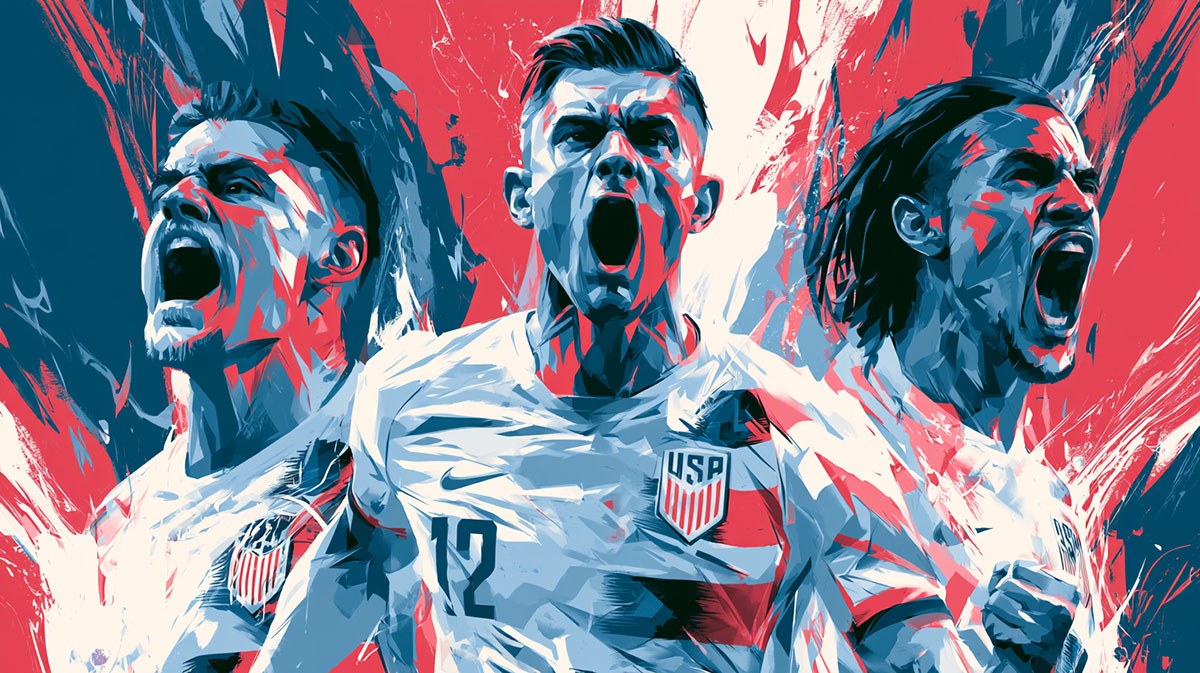
An advanced technical report analyzing the United States' official 2026 World Cup squad. This strategic breakdown evaluates Mauricio Pochettino’s structural configurations, addresses the severe midfield depth crisis following key defensive injuries, and provides the complete verified 26-man player database.
The formal unveiling of the United States Men’s National Team (USMNT) 26-man roster from Pier 17 in New York has officially locked the host nation’s tactical blueprint for the 2026 World Cup. Operating under intense domestic pressure, head coach Mauricio Pochettino has assembled a squad designed to transition away from previous stylistic dogmas toward a hyper-vertical, intense counter-pressing framework. However, executing this high-tempo identity on home soil requires solving major physical thresholds and structural imbalances caused by high-profile late-season medical updates.
USMNT 2026 World Cup Squad Quick Facts & Roster
Manager: Mauricio Pochettino (Head Coach) Key Midfield Absences: Johnny Cardoso, Tanner Tessmann (Both Out Due to Injury)
Goalkeepers
Matt Turner (Crystal Palace), Matt Freese (New York City FC), Chris Brady (Chicago Fire)
Defenders
Antonee Robinson (Fulham), Sergiño Dest (PSV), Chris Richards (Crystal Palace), Tim Ream (Charlotte FC), Joe Scally (Borussia Mönchengladbach), Mark McKenzie (Toulouse), Auston Trusty (Celtic), Miles Robinson (FC Cincinnati), Max Arfsten (Columbus Crew), Alex Freeman (Villarreal)
Midfielders
Tyler Adams (Bournemouth), Weston McKennie (Juventus), Malik Tillman (Bayer Leverkusen), Gio Reyna (Borussia Mönchengladbach), Brenden Aaronson (Leeds United), Sebastian Berhalter (Vancouver Whitecaps), Cristian Roldan (Seattle Sounders)
Forwards
Christian Pulisic (AC Milan), Timothy Weah (Marseille), Folarin Balogun (Monaco), Ricardo Pepi (PSV), Haji Wright (Coventry City), Alejandro Zendejas (Club América)
“"Hosting a global tournament demands systemic resilience. Pochettino’s blueprint trades absolute midfield safety for volatile transitional weapons, betting heavily on individual defensive overloads."”
Analytically, operating Adams as an isolated single-pivot in a nominal 4-2-3-1 or an asymmetric 3-4-3 introduces immense structural risk. Given Adams' history of physiological workload management, the absence of a reliable defensive understudy forces central profiles like Weston McKennie or Malik Tillman into deeper, unaccustomed tracking roles. If opponent mid-blocks bypass the initial American counter-pressing line, the host's center-backs will face direct, unprotected vertical runners, exposing the backline to extreme negative transitions.
“Scout Insight: The undisputed technical epicenter of the squad. Operating from the left channel with inverted license, his elite half-space acceleration and isolation carrying metrics dictate the entirety of the USMNT’s final-third progression.”
From an elite scouting perspective, Reyna’s inclusion represents a calculated risk based purely on spatial manipulation capabilities. When deployed in tight central pockets or intermediate zones, his world-class line-breaking vision offers a decentralized creative alternative that alleviates the playmaking burden from Pulisic. However, his current deficit in high-intensity match fitness means he is highly likely to be utilized as a late-game tactical unlock against low-block defensive units rather than a high-pressing starter against elite transitional powerhouses.
“Scout Insight: A high-ceiling creative asset specializing in final-third pocket navigation. While his pressing metrics and match-minute consistency are significantly compromised, his pure vertical distribution remains unmatched in the domestic pool.”
Note: This analysis was generated by Scout Gamer Lead Editor based on verified scouting data and live market reports as of May 26, 2026.